
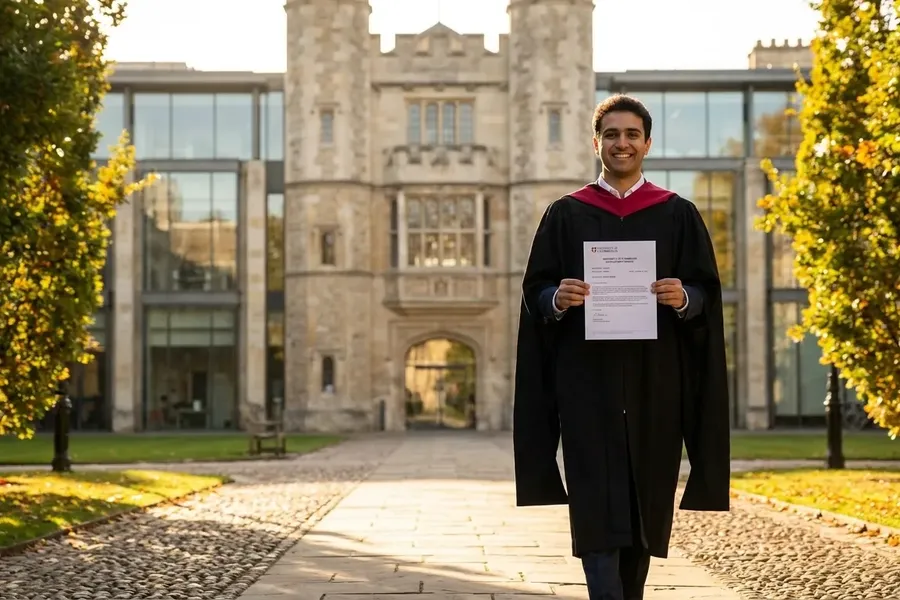
Master's Scholarships in India and Abroad
A practical guide to master's scholarships in India and abroad, covering UGC, AICTE, Reliance Foundation, Chevening, Commonwealth, Erasmus Mundus, DAAD, Inlaks, J N Tata, and more.
Master's scholarships are not one single category. A student planning a master's in India needs to look at UGC, AICTE, foundation, institute, and subject-linked funding. A student planning a master's abroad needs a different route: government scholarships, university awards, country-specific schemes, and Indian foundation support for overseas study.
The best way to search is not to collect hundreds of scholarship names. It is to match the scholarship with the course level, destination, subject, financial need, academic profile, and application timeline. A GATE-qualified M.Tech applicant in India, a public-policy applicant going to the UK, and a design student applying to Europe should not use the same scholarship shortlist.
Quick overview of master's scholarship options
| Scholarship | Study Location | What It Can Cover | Best Fit |
|---|---|---|---|
| UGC National Scholarship for Post Graduate Studies | India | Financial assistance for postgraduate degree study | Indian students pursuing eligible PG programmes in India |
| AICTE Post Graduate Scholarship | India | Monthly scholarship for full-time GATE/CEED-qualified PG technical students | M.Tech, M.E., M.Arch., M.Des. and similar AICTE-approved PG students |
| Reliance Foundation Postgraduate Scholarships | India | Up to INR 6 lakh over the degree duration | Strong PG students in selected future-ready fields |
| Chevening Scholarships | UK | Full financial support for eligible one-year master's study | Applicants with leadership potential and work experience |
| Commonwealth Master's Scholarships | UK | Funding for eligible Commonwealth applicants who cannot otherwise afford UK study | Students linking their course to development impact |
| Erasmus Mundus Joint Masters | Europe and partner countries | Full scholarships for selected students in joint master's programmes | Students open to studying across multiple universities and countries |
| DAAD Master's Scholarships | Germany | Scholarship support for postgraduate study depending on programme | Graduates applying for master's-level study in Germany |
| Inlaks Shivdasani Scholarship | Abroad | Up to USD 120,000 for tuition, living expenses, one-way travel, visa costs, and health allowance | Indian students pursuing selected high-quality postgraduate programmes abroad |
| J N Tata Endowment Loan Scholarship | Abroad | Merit-based loan scholarship for higher studies overseas | Indian students pursuing master's, PhD, or postdoctoral study abroad |
UGC National Scholarship for Post Graduate Studies
The UGC National Scholarship for Post Graduate Studies is meant to provide financial assistance to Indian students pursuing postgraduate degrees. It is one of the most relevant domestic scholarship routes for students who want to continue master's study in India.
This scholarship is useful for students who already know they want to study in India and need support for a regular postgraduate degree rather than an overseas route. The practical detail students should not miss is that UGC-linked schemes are usually process-sensitive: students need to track the National Scholarship Portal cycle, keep bank and identity details consistent, and avoid waiting until the last week to collect category or institutional proof.
- Preparation focus: admission proof, academic records, category documents where applicable, and National Scholarship Portal readiness
- What to check: current year guidelines, slot rules, eligibility conditions, and application dates
AICTE Post Graduate Scholarship
The AICTE Post Graduate Scholarship is highly relevant for technical master's students in India. AICTE states that it awards a post-graduate scholarship of INR 12,400 per month to full-time GATE or CEED qualified students admitted to AICTE-approved postgraduate programmes.
The important point here is timing. Students often clear GATE or CEED and then treat the scholarship as automatic, but institute verification, admission category, bank details, and portal submission still matter. A student should keep the scorecard, admission letter, and institute records ready before the portal window opens, because delays usually happen at the verification stage rather than at the basic eligibility stage.
- Documents usually needed: GATE/CEED score, admission proof, bank details, institute verification, and student identity documents
- Preparation focus: keep scorecard, admission records, and institute-level verification ready early
Reliance Foundation Postgraduate Scholarships
Reliance Foundation Postgraduate Scholarships are among the most visible private scholarship routes for postgraduate study in India. The official page states that up to 100 postgraduate scholars are selected and that the total scholarship amount can be up to INR 6 lakh over the degree duration.
This scholarship is not just about reducing tuition pressure. It is designed for students in future-focused fields, so the application should show direction: why the field matters, what the student has already done in that area, and how the postgraduate degree connects to a larger career or impact path. Students should avoid writing a generic need-based essay if the award is asking for potential, leadership, and field fit.
- Preparation focus: academic profile, purpose statement, leadership evidence, and field fit
- Why it matters: it supports both academic costs and professional development, not only tuition
Chevening Scholarships
Chevening Scholarships are one of the strongest fully funded master's scholarship routes for the UK. They support one-year master's degrees and are aimed at applicants with leadership potential, strong academic backgrounds, and a clear plan to create impact after study.
Chevening is heavily leadership-focused, so the strongest applications usually feel like a career story rather than a marksheet summary. Students should prepare examples of influence, networking, decision-making, and problem-solving. The essays should also explain why the chosen UK courses fit the applicant's long-term plan, not just why the universities are highly ranked.
- Preparation focus: work experience, leadership essays, career plan, course choices, and return-home impact
Commonwealth Master's Scholarships
Commonwealth Master's Scholarships are for candidates from eligible low and middle income Commonwealth countries who want to undertake full-time taught master's study at a UK university. The programme is funded by the UK Foreign, Commonwealth and Development Office.
This route is not only about getting a UK master's degree. The application must connect the course to development impact. Students should prepare a clear explanation of the problem they want to work on, why the selected course helps, and how the learning will be used after returning. A vague "I want to contribute to society" answer will usually feel too weak for this kind of award.
- Academic expectation: usually at least upper second-class standard or equivalent, depending on current rules
- Preparation focus: development impact statement, academic record, references, and nomination route
Erasmus Mundus Joint Masters
Erasmus Mundus Joint Masters are among the strongest master's scholarship routes for students who want to study in Europe. The official Erasmus+ page says students from all over the world are welcome and that full scholarships are available for the best students.
The biggest difference is that the programme comes before the scholarship. Students should not start with a generic Erasmus essay. They should first shortlist the exact joint master's programmes, study the partner universities, understand the mobility path, and then write a motivation letter that explains why that multi-country structure fits their academic goal.
- Preparation focus: programme-specific motivation letter, academic fit, recommendation letters, and early deadline tracking
DAAD Master's Scholarships
DAAD scholarships are important for students targeting Germany. DAAD states that its scholarships are aimed primarily at graduates, doctoral students, and postdocs and are awarded for study and research visits to universities and non-university research institutions in Germany.
DAAD preparation should start with the scholarship database, not with a random Germany scholarship list. The reason is simple: eligibility, stipend, language requirement, and documents vary by programme. A student applying for public policy, engineering, architecture, or development-related study may face different document expectations and different timelines.
- Documents usually needed: academic records, CV, motivation letter, recommendation, language proof, and programme-specific documents
- Preparation focus: choose the right DAAD programme before preparing the application
Inlaks Shivdasani Scholarship
The Inlaks Shivdasani Scholarship supports Indian students pursuing selected postgraduate study abroad. The official page says the value depends on the course and covers tuition fees, living expenses, one-way travel, visa costs, and health allowance up to USD 120,000.
Students should not treat Inlaks as a generic overseas scholarship for every course. It is selective, field-sensitive, and expects strong academic or creative promise. The application should show why the chosen programme is worth funding, why the student is ready for it, and how the field connects to serious future work. For creative or design-heavy courses, portfolio quality can matter as much as written statements.
- Preparation focus: course fit, portfolio where relevant, academic excellence, interview readiness, and realistic budget
J N Tata Endowment Loan Scholarship
The J N Tata Endowment supports higher studies overseas through merit-based loan scholarships. The official site says it supports master's, PhD, and postdoctoral fellowships across education streams, and its eligibility page says candidates should be Indian citizens, not older than the stated age limit for the cycle, and graduates of a recognised Indian university with at least 60% marks on average.
This is a loan scholarship rather than a pure grant, so students should understand repayment conditions carefully before treating it like a normal scholarship. It can still be valuable because it is merit-based, respected, and can sit alongside savings, university aid, or an education loan in a larger overseas funding plan.
- Eligibility focus: Indian citizenship, academic record, recognised Indian university degree, and age requirement for the cycle
- Preparation focus: admission proof, academic records, statement of purpose, interview readiness, and repayment awareness
Aga Khan Foundation International Scholarship Programme
The Aga Khan Foundation International Scholarship Programme supports postgraduate study for selected students from eligible countries. The official page says scholarships for master's studies are granted for the entire duration of the degree course, and the award is structured as half grant and half loan.
This programme is useful for students who need serious funding support but are comfortable with a partial repayment obligation. The practical task is to check whether the student's country, course, and local application route are eligible before preparing essays. Applicants should also be ready to explain both financial need and academic purpose clearly.
- Preparation focus: financial need documentation, admission strength, course relevance, and repayment understanding
How to choose the right master's scholarship
-
Separate India and abroad funding first.
- UGC, AICTE, and Reliance Foundation are mainly domestic routes, while Chevening, Erasmus, DAAD, Inlaks, and J N Tata are for overseas study.
-
Check whether the award is a grant, stipend, tuition waiver, or loan scholarship.
- A pure scholarship and a loan scholarship affect long-term planning very differently.
-
Match the scholarship to the subject and destination.
- Technical students may fit AICTE in India, while Germany-focused applicants should examine DAAD routes carefully.
-
Read the official deadline before building the application.
- Many master's scholarships close months before the course begins, and some require an admission offer first.
-
Prepare proof, not just statements.
- Scholarship applications need documents, academic evidence, leadership examples, financial proof, or development-impact logic depending on the award.
Documents usually needed for master's scholarships
- Academic transcripts and degree certificates
- Admission offer or proof of application where required
- Statement of purpose or motivation letter
- Recommendation letters
- CV or resume
- Passport and identity documents
- Income or financial-need documents for need-based awards
- Test scores such as GATE, CEED, IELTS, TOEFL, GRE, or GMAT where relevant
- Portfolio for design, arts, architecture, film, or creative programmes where required
- Research proposal for research-heavy master's or fellowship routes
Common mistakes students make
- Using one scholarship list for both India and abroad without checking location fit
- Applying for a master's scholarship that is actually meant for PhD or postdoctoral study
- Ignoring domestic scholarships such as AICTE or UGC while focusing only on overseas awards
- Not checking whether the scholarship is a grant or a loan scholarship
- Writing generic essays that do not match leadership, development impact, or subject fit
- Missing deadlines because admission and scholarship timelines were tracked separately
Summary
Master's scholarships in India and abroad work best when students build a focused shortlist. For India, UGC, AICTE, Reliance Foundation, institute-level awards, and subject-based scholarships can reduce the cost of postgraduate study. For abroad, Chevening, Commonwealth, Erasmus Mundus, DAAD, Inlaks, J N Tata Endowment, and Aga Khan Foundation routes are worth serious research. The strongest applications are specific, evidence-based, and matched to the exact scholarship rules rather than copied across every award.
FAQs
Questions from this guide
Which master's scholarships are available in India?
In India, options include UGC PG scholarships, AICTE PG scholarships, Reliance Foundation scholarships, institute-level merit awards, and subject-based scholarships for specific fields.
Which scholarships cover full master's study abroad?
Scholarships that may cover significant costs include Chevening, Commonwealth Master's, Erasmus Mundus, DAAD, Inlaks, J N Tata Endowment, and Aga Khan Foundation scholarships. Coverage varies by award.
Do I need work experience for master's scholarships?
Some scholarships like Chevening prefer at least two years of work experience, while others like Commonwealth and Erasmus Mundus may not strictly require it. Check each scholarship's eligibility criteria.
Can I apply to multiple scholarships at the same time?
Yes, students can usually apply to multiple scholarships. However, some fully funded awards may not allow combining with other major funding sources.
When should I start preparing scholarship applications?
Start at least 12-18 months before the intended course start date. Many scholarships have deadlines 8-12 months before the academic year begins.