
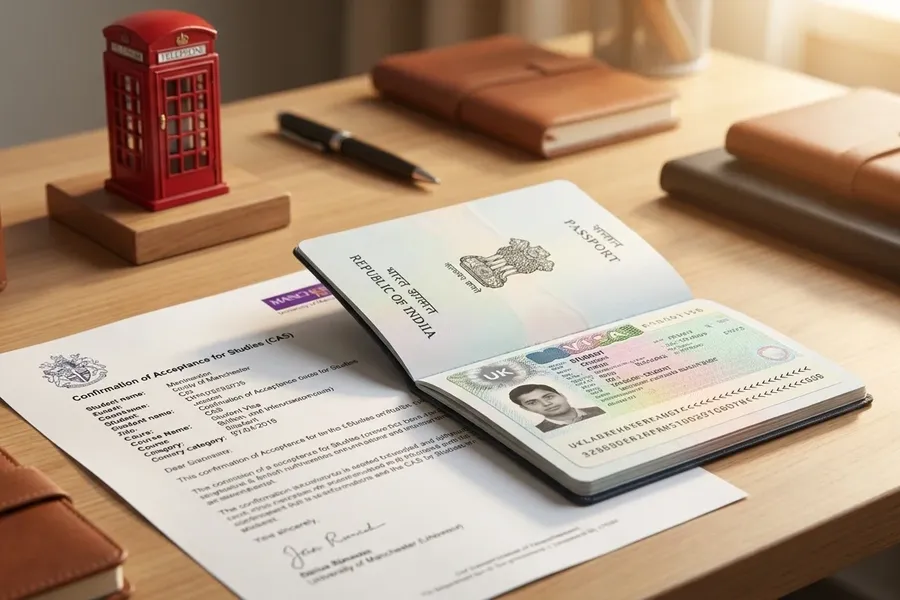
UK Visa Guide for Students: Routes, Documents and Application Steps
A practical UK visa guide for Indian students covering Student visa, Child Student visa, Standard Visitor, Graduate visa, dependants, CAS, financial proof, documents and application steps.
A UK visa decision should begin with one question: Why is the applicant going to the UK? A student joining a full-time degree, a school student under 18, a visitor attending a short course and a graduate staying back after studies do not use the same visa route. If the route is wrong, even a strong admission profile can face delays, document issues or refusal risk.
For Indian students, the Student visa is usually the main route. But the UK visa system also includes Child Student, Standard Visitor and Graduate visa routes that become important at different stages of the study journey.
Start With the Right UK Visa Route
The easiest way to understand UK visas is to connect the route with the student’s actual purpose: Short visit, school study, university study, dependant travel or post-study work. This route decides what documents are needed, what financial proof must be shown and what the applicant is allowed to do after entering the UK.
| Student Situation | Likely UK Visa Route | What This Route Usually Covers |
|---|---|---|
| Full-time higher education | Student visa | Degree, postgraduate, eligible sponsored courses and CAS-based study. |
| Age 4 to 17 at an independent school | Child Student visa | Study at an independent school in the UK. |
| Short course, exam or campus visit | Standard Visitor | Study up to 6 months, short research, entrance exams or campus visits. |
| After completing an eligible UK course | Graduate visa | Stay in the UK after study to work or look for work. |
| Partner or children joining the student | Student dependant route, where eligible | Dependants are restricted and depend on course level and current UK rules. |
This route check is important because a Standard Visitor visa cannot replace a Student visa for a long-term degree. In the same way, the Graduate visa cannot be used before completing an eligible UK qualification.
Student Visa: For Full-Time University Study
The UK Student visa guidance explains that this route is for people aged 16 or over who have been offered a place on a course by a licensed student sponsor. The university issues a Confirmation of Acceptance for Studies, usually called CAS, and that CAS becomes the central document in the visa application.
Students can usually apply from outside the UK up to 6 months before the course starts. A student should not rush the application just because admission is confirmed. The CAS, passport details, financial documents and course information should all match before the online application is submitted.
Standard Visitor: For Short Study or Campus Visits
The Standard Visitor route can work for limited study-related travel. The GOV.UK visit-to-study guidance says visitors can study at an accredited institution for up to 6 months, do short research relevant to an overseas course, sit an exam or complete certain medical electives or clinical attachments.
This route is not suitable for a full degree. It is more useful for short English courses, campus visits, entrance exams, vivas, short research, interviews or temporary academic activities where the student is not joining a long-term sponsored course.
Child Student Visa: For School-Level Applicants
The Child Student visa guidance says this route is for children aged 4 to 17 who want to study at an independent school in the UK. Students aged 18 or above should normally check the Student visa route instead.
This route has its own consent, care arrangement and financial evidence expectations. Families should not treat it as a smaller version of the adult Student visa because the requirements around guardianship, parental consent and school arrangements can be different.
Financial Proof: What UKVI Checks Closely
UK Student visa financial evidence is strict. The GOV.UK money guidance says students need enough money to pay for their course for one academic year, up to 9 months, as shown on the CAS. They also need living costs unless an exemption applies.
The financial evidence guidance explains that Student and Child Student applicants may need to show money for course fees, living costs and dependant costs where relevant. Some applicants are exempt, such as certain students who have already been in the UK with a valid visa for at least 12 months.
- Course fees: Use the CAS amount and subtract fees already paid only if reflected correctly.
- Living costs: Check the current monthly amount for London or outside London before applying.
- 28-day rule: Funds usually need to be held for the required period unless accepted loan or sponsorship evidence is being used.
- Loan letters: Education loan evidence should match UKVI requirements, not just the bank’s normal sanction format.
- Dependants: If dependants are eligible, their living-cost proof is separate from the student’s funds.
Documents Students Should Keep Ready
For a Student Visa File
- Valid passport or travel document.
- CAS from the licensed student sponsor.
- Proof of funds for fees and living costs where required.
- Academic documents listed on the CAS.
- ATAS certificate if the course requires it.
- TB test certificate if required for the applicant’s country.
- Parental consent and relationship proof if the applicant is under 18.
For a Visitor or Short-Study File
- Passport and travel history.
- Proof of short course, exam, research or visit purpose.
- Evidence of funds for the trip.
- Accommodation and travel plan.
- Evidence that the applicant will leave the UK after the visit.
From CAS to Visa Decision: The Application Flow
-
Confirm the visa route:
Check whether Student, Child Student, Standard Visitor or Graduate route fits the purpose of travel.
-
Collect the core document:
For a Student visa, this is CAS. For visitors, it is proof of visit, exam, research or short-study purpose.
-
Prepare financial proof:
Check course fees, living costs, the 28-day fund rule, education loan letter or sponsorship document.
-
Complete the online application:
Use the correct GOV.UK route page and enter details exactly as shown in the passport and CAS.
-
Pay visa fee and IHS:
Most Student visa applicants also pay Immigration Health Surcharge as part of the process.
-
Prove identity:
Use the app where eligible or attend a visa application centre appointment.
-
Wait for the decision:
Do not book risky travel until permission and passport status are clear.
Graduate Visa: Staying Back After a UK Degree
The Graduate visa guidance says this route allows eligible students to stay in the UK after successfully completing an eligible course. Applicants must be in the UK when they apply. GOV.UK says the route gives permission for at least 18 months after completing an eligible course.
Students should not confuse the Graduate visa with employer sponsorship. The Graduate route allows work or job search without needing a sponsor at the point of application, but it is still a separate visa application with its own timing and eligibility rules.
Common Mistakes That Delay UK Visa Applications
- Using a visitor route for a course that needs a Student visa.
- Applying before CAS details are final.
- Showing funds that do not meet the 28-day rule or UKVI evidence format.
- Forgetting ATAS, TB certificate or parental consent where required.
- Assuming dependants are always allowed.
- Booking travel before visa decision and passport return.
- Ignoring differences between tuition paid, CAS amount and funds shown.
Summary
A UK visa application becomes easier when the student chooses the route by purpose: Student visa for full-time higher study, Child Student for eligible school students, Standard Visitor for short study or visits, and Graduate visa after completing an eligible UK course. The strongest application is built around CAS accuracy, correct funds, clean documents and the right timing.
FAQs
Questions from this guide
Which UK visa do Indian students usually need?
Most Indian students joining a full-time UK higher education course need a Student visa. Short courses up to 6 months may fit the Standard Visitor route, while school students aged 4 to 17 may need a Child Student visa.
When can I apply for a UK Student visa?
Students applying from outside the UK can usually apply up to 6 months before the course starts, but they should wait until they have CAS and the required financial evidence ready.
How much money do I need for a UK Student visa?
Students need enough money for course fees for one academic year, up to 9 months, plus living costs unless exempt. The exact amount depends on the CAS, study location and current UKVI rules.
Can I stay in the UK after my course?
Eligible students may apply for the Graduate visa after successfully completing an eligible UK course, but they must apply from inside the UK while they meet the route requirements.